


In 2020, despite many difficulties and challenges (from both internal and external factors), especially the Covid-19 pandemic, severe natural disasters, storms and floods, trade tensions still escalate, and complex geopolitics competition …, but our economy still maintains stability, well controlled inflation and consumer price index, achieving a growth rate of 2.91%, which is among the highest in the world. With that great achievement of the domestic economy, there was an important contribution from the energy sub-sectors of Vietnam. Here are the 10 typical events in 2020 of the energy sector of Vietnam voted by the Scientific Council of Vietnam Energy Journal.
1/ Issuing the Politburo’s Resolution 55 dated February 11, 2020 about “Vietnam’s National Energy Development Strategy to 2030, vision 2045”. The resolution issues views, objectives, task orientation and solutions for major energy development to 2030, vision 2045.
The overall goals are: To firmly ensure national energy security; sufficiently provide stable and high quality energy at reasonable prices for rapid and sustainable socio-economic development, ensuring national defense and security, improving people’s lives, contributing to ensure the ecological environment protection. The energy sector develops harmoniously among sub-sectors with synchronous and intelligent infrastructure, reaching the advanced level of the ASEAN region. Building a competitive, transparent, efficient energy market that is consistent with the socialist-oriented market economy institutions. Exploit and efficiently use domestic energy resources in combination with reasonable energy export and import; Thoroughly practice energy saving and efficient use. Actively produce a number of major equipment in the energy sub-sectors; upgrade and build an advanced and modern power transmission and distribution grid.
2/ Implementing the task of building “National energy master plan for 2021 – 2030, vision to 2050” according to Decision No. 1743/QD-TTg dated December 3, 2019 of the Prime Minister, and “The national energy master planning for 2021 – 2030, vision to 2050” (EP). In 2020, the Ministry of Industry and Trade established EP and is currently completing the final contents to report to the Prime Minister in early 2021.
This is the first time Vietnam set up a national energy master plan, which considers the harmonious development of the energy sub-sectors: Coal – Petroleum – Electricity and Renewable Energy.
3/ Completing the report on national electricity development planning for 2021-2030, considering 2045 (PDP VIII). With the orientation of Resolution 55 of the Politburo, PDP VIII has been implemented urgently in 2020 and is currently being submitted to the Ministry of Industry and Trade for appraisal and reported to the Prime Minister for consideration and approval. PDP VIII has shown a strong shift from traditional power sources to renewable energy (RE) with a view to minimizing social costs, saving energy, reducing pollution and greenhouse emissions, as well as protecting the environment and developing sustainably.
Accordingly, by 2030 and 2045, the RE ratio accounts for 46.9% and 52.9% of the total power source capacity respectively, of which the RE sources (non-hydroelectricity) accounts up to 28.8% and 43.7% correspondingly. Coal thermal power will reduce its share from about 33% at the present to 27.2% in 2030 and to 18% in 2045.
4/ New discovery of the Ken Bau gas field at Lot 114 located offshore the northern continental shelf of Vietnam, in the Red River basin, 65 km from the nearest mainland in Quang Tri province, about 86 km from Da Nang, shows the significant hydrocarbon accumulation, estimated at 7 to 9 thousand trillion cubic feet of natural gas (Tcf) on site and between 400 to 500 million barrels of condensate.
This is a historical discovery of the Vietnam Oil and Gas industry until 2020. In the period up to 2030, after having certain affirmation of quantity, Ken Bau gas field is expected to contribute significantly to the energy self-reliance as our current oil and gas fields are in decline.
5/ Appointing senior personnel at Vietnam Oil and Gas Group (PVN). On November 16, 2020, the Prime Minister signed Decision No. 1819/QD-TTg on the mobilization and appointment of Mr. Hoang Quoc Vuong, Member of the Party’s Civil Affairs Committee, Deputy Minister of Industry and Trade as the Chairman of the Vietnam Oil and Gas Association.
6/ Updating PVN development strategy for 2020 – 2025, vision to 2035. From 2021 – 2025, with vision to 2035, PVN will aim to become an energy corporation, developing synchronously with the core sector which is oil and gas exploration and exploitation (E&P), continuing to contribute to ensuring national energy security and maintaining the position of a key economic corporation of the country.
Besides, PVN aims to make a great contribution in the field of oil and gas science and technology, ready to become an “initiator” for scientific and technological development in oil and gas, clean energy and renewable energy (especially offshore wind energy) in the future.
7/ Coal importation increased to a record high. In the first nine months of 2020, Vietnam imported 44.6 million tons of coal of all kinds, worth $3.080 billion, increasing by 37.8% in quantity and 5.8% in value over the same period last year. The amount of imported coal in 9 months exceeded the whole year of 2019.
Having been foreseen, it is proved that Vietnam will continue to import fuel. The three largest coal importing markets of Vietnam are Australia, Indonesia and Russia.
8/ The electricity industry reached a new milestone, by the end of 2020, the total installed capacity of Vietnam’s electricity system was about 61,000 MW, the scale of the electricity system ranked second in Southeast Asia and 23rd in the world (in which, the source power owned by EVN is more than 29,600 MW). EVN has made a great deal of remarkable achievements in approaching and improving electricity. The percentage of households using electricity by 2020 is 99.5%, double than that 25 years ago.
With its achievements and great contributions to the country over the past decades, on December 21, 2020, EVN was honored to be awarded the title of Labor Hero by the President in the renovation period on the 66th anniversary of Vietnam’s electricity.
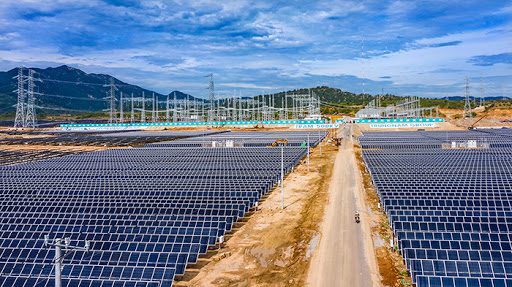
9/ To continue the rapid development of renewable energy (non-hydroelectric) sources. With the Government’s policies in encouraging renewable, by the end of 2020, the total installed capacity of wind power reached 485 MW, while solar power (PV power) reached 19,400 MWp, equivalent to 16,500 MW and accounting for over 25% of the total electrical sources nationwide, including 9,296 MWp from rooftop solar power; and 327 MW from biomass power.
In terms of output, by the end of September 2020, electricity produced from wind power reached 630 million kWh, biomass electricity reached 303 million kWh. Particularly, the output of electricity from solar power sources in 2020 will reach 10.6 billion kWh (including 1.16 billion kWh from rooftop power), accounting for 4.3% of the total electricity output nationwide.
10/ The energy industry has been assisting the whole country in overcoming not only the Covid-19 pandemic but also the unusual natural disasters throughout the history by ensuring the supply of energy and electricity to meet the needs of production and daily life, especially for areas severely affected by the Covid-19 pandemic, natural disasters, floods and landslides.
Vietnam Coal – Minerals Industries Group (TKV) has faced many difficulties and challenges. However, with the efforts of its employees, the Group has successfully completed the plan, ensuring the production and business targets for 2020 according to the proposed Resolution.
For the Vietnam Oil and Gas industry, PVN has successfully applied a solution to the Covid pandemic double crisis and the reduced oil price, bringing high efficiency. As a result, it helps to reduce operation costs in oil and gas exploitation, helping PVN to become one of the rare oil and gas groups in the world making profits and crucial contribution to the state budget and economic growth./.


