



People often talk about global warming, rapid ice melting at the poles, and many other extreme weather events. But again and again, the unusually low temperatures that had devastated the areas from Turkey to Texas have become the focus of global media.
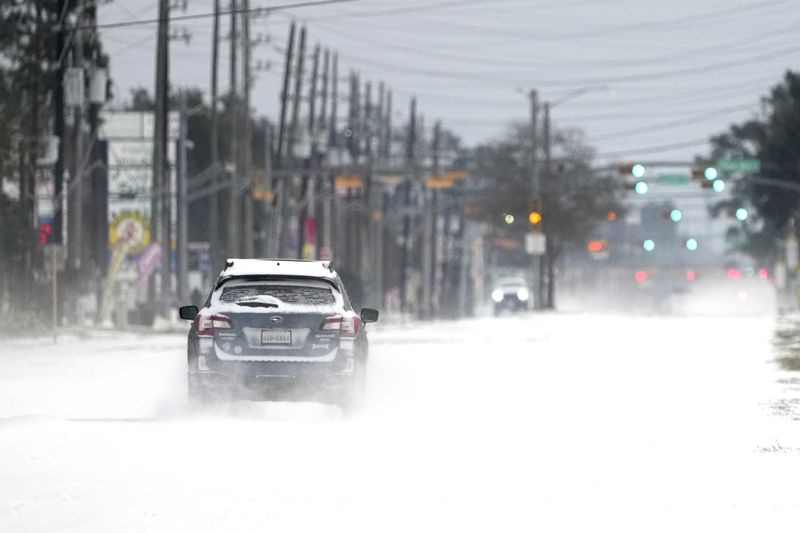
Let’s start in the United States. It was the first time in 17 years that a large area of the United States was covered with snow and the constant power outages meant many people had no electricity, suffering from freezing temperatures. Energy companies are struggling to maintain electricity due to freezing wind turbines and the flow of natural gas being blocked from frozen pipes. According to USA Today: “In Texas, more than 1.6 million homes and businesses are still out of power on the late Wednesday night, and some even had no water to use.”
Like any incident or emergency, people will look for someone or something to blame the mistakes. This time they think that the main cause is the failure of the renewable energy. The blame has fueled the endless debates about the role of renewable energy and the potential to replace fossil fuels in the future.
Unfortunately, Texas had to experience prolonged power outages, temperatures dropping below zero, disrupting all activities of the energy industry. This situation has prompted both the Federal Energy Regulatory Commission and the North American Power Reliability Corporation to announce a joint investigation of the mass power system’s performance under extreme weather conditions this month in the mid-western and southern regions.
Meanwhile in Europe
According to Sky News, this month is the coldest February in Germany since 2012. France installed wind fans on the Eiffel Tower to thaw. Ice covered a jetty in the frozen IJsselmeer sea in the north of Amsterdam. Athens of Greece, where temperature drops down to -19 degrees Celsius, had to go through power-cut due to falling trees.
Germany experienced freezing temperatures caused by Storm Darcy over the past week, the German Weather Agency issued an extreme weather warning, requesting emergency teams on standby because of the “unusual start of winter”. Millions of solar panels are buried in snow and more than 30,000 wind turbines stand still due to the lack of wind in Germany. The intermittent supply of renewable energy has led locals to look for coal power as if there is no tomorrow. In this situation, the wholesale price of electricity in Europe has risen sharply due to forecast of a relatively weak German wind power supply, and lower capacity to supply nuclear power in France due to unplanned maintenance weather.
Winter coming to Europe has raised many similar questions to those under debate in the US, ‘Are we shifting too quickly to weather-dependent renewable energy, shutting down coal and nuclear power plants to stabilize the grid? Is the climate change that we have been trying to limit through renewables getting us back to the fossil fuels that cause climate change in the first place?
The balance in the energy structure
It seems that the harsh weather has led to some extreme views, from policymakers to people shivering in their cars with engines running. It is conceivable that people become frustrated and anxious when the lights are off, however, it is important to minimize misinformation and understand that these are really extreme weather events, which are beyond the tolerance of the grids.
The truth is, not every turbine freezes in winter.
I suggest we look at the problem as a whole. Extreme weather is becoming more frequent and convenience store companies, policymakers and engineers need to consider this when making plans on demand and addressing grid resilience strategies. It’s easier said than done because first, the grid is a complex machine with many moving parts, and second, humans suffer from Normalcy Bias, a tendency that prevents us from facing worst scenarios. However, as the climate changes, our infrastructures should also change to become stiffer. This of course happens on the larger grids. But I doubt we’ll see this happen at the consumer level as well, when people consider becoming consumers or even thinking about a complete escape.
In short, we should focus less on prejudice and more on what can be done to ensure we are better prepared for the next weather events. Let’s put together our risk reduction plans in a few respects, let’s install those cold weather kits, even in Texas, because we don’t know what tomorrow will turn out to be.
As Rod Walton puts it: “… provided scenarios are not beneficial. Convenience store companies have to plan ahead and spend millions of dollars to meet the needs they anticipate. How can be a grocery store running out of bread and toilet paper? They made plans for their inventory in advance, then a virus or an election or just some rumors about the Revelations will happen, and scared residents were rushing to shop and store. The shortage and the cold were unprecedented events, so it caused unforeseen tension on the grids. It is not the fault of the convenience stores, nor any specific source of energy such as coal, nuclear, gas, wind, or solar power. That’s just economics and human behavior.
“We need everything – fossils, nuclear and other non-carbon resources. Carbon emissions and climate impacts are real. Balance is the key. Politics is not “
Source: powerengineeringint.com


